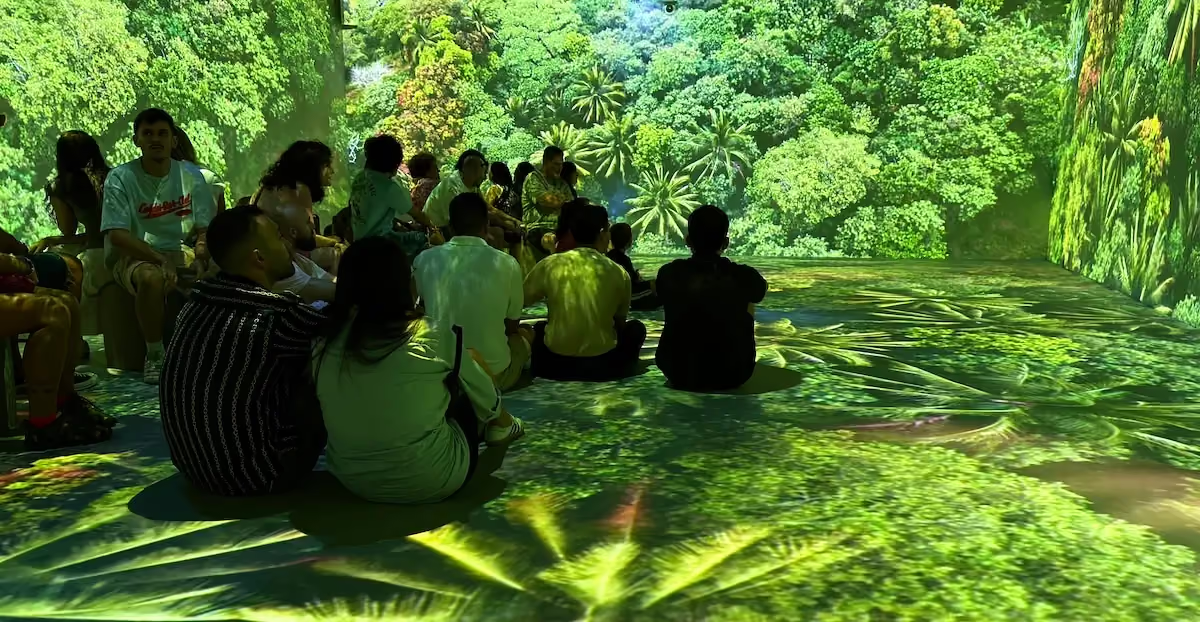
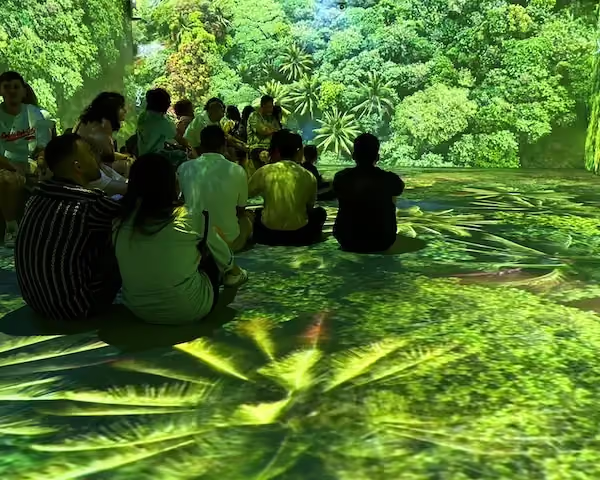


Walk into CaixaForum Madrid this summer and three galleries have been rebuilt into an immersive route rather than a traditional exhibition. Somos Naturaleza runs from 3 June 2026 to 7 March 2027, giving the building's latest large-scale immersive project a nine-month residency in the heart of the Paseo del Arte.
What it is
Produced by OASIS Immersive Studios in collaboration with National Geographic, and backed by the United Nations, the David Suzuki Foundation and the Biodiversity Workshops, the 70-minute route is built as a triptych. It opens with a large-format audiovisual piece by Katerine Giguère and Johnny Ranger drawing on National Geographic's own imagery. From there, a digital gallery designed by Alex Le Guillou moves into cellular structures and root systems, with a score by composer Azu Tiwaline. Filmmaker Émile Roy closes the route with a mosaic of real-world case studies where collective action has reversed environmental damage.
Why it's worth it
The exhibition won Best International Exhibition at the 2025 Numix Awards. Beyond the three main audiovisual sections, CaixaForum has built mediation activities into the route, including hands-on games such as El equilibrio que nos sostiene (The balance that sustains us) and Ideas de interdependencia (Ideas of interdependence), plus an autumn film cycle for families. That combination makes a single €6 ticket stretch into more than a quick 70-minute visit if there's time to spare.
Practical info
CaixaForum Madrid opens daily, including public holidays, from 10:00 to 20:00 at Paseo del Prado 36, in the Art Triangle alongside the Prado, Thyssen and Reina Sofía. Entry is €6, free for CaixaBank clients and under-16s. The building is a short walk from Atocha or Estación del Arte on line 1, with step-free access throughout, adapted toilets and reserved auditorium seating.
FAQ
How long does the visit take?
Around 70 minutes for the full immersive route.
Is it suitable for young children?
Yes, the format works for families, with mediation activities and games available after the main route.
Is the exhibition accessible?
The building has step-free access throughout, adapted toilets, and reserved auditorium spaces.
Are there quieter times to visit?
Weekday mornings tend to be less crowded than weekend afternoons.
Is there a family film programme linked to it?
Yes — an autumn series called Pequeños cinéfilos screens ecology-themed films with educator-led discussions.