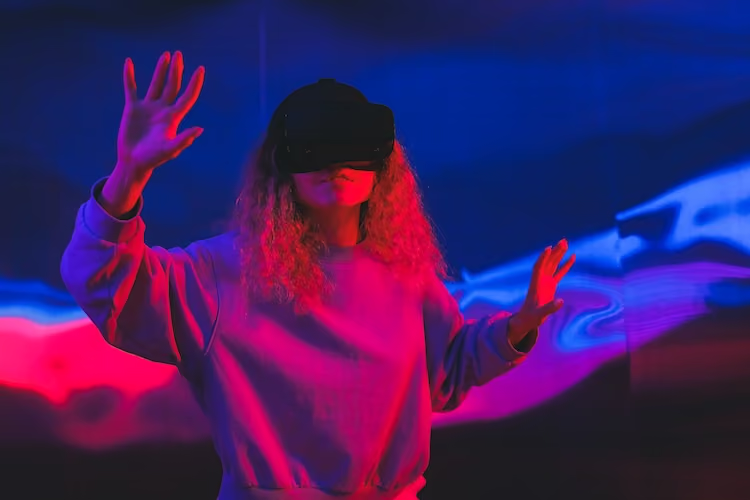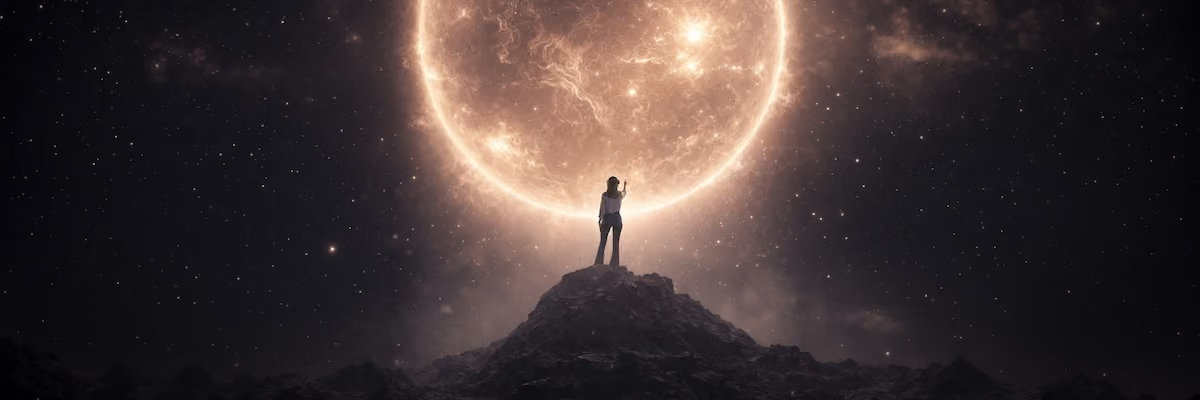
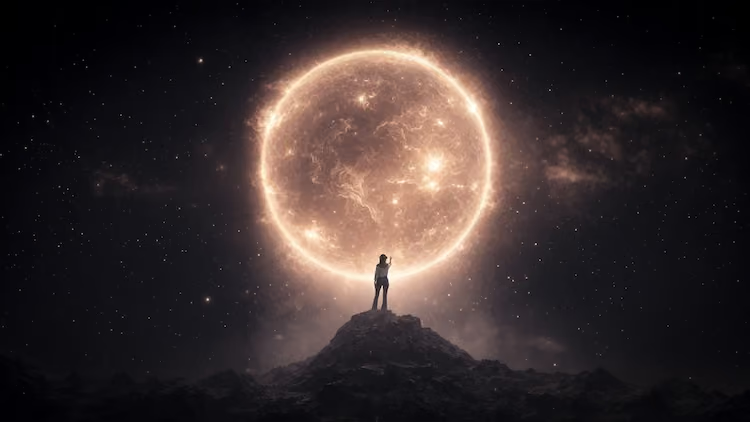


Smithsonian Starstruck is a free-roaming virtual reality experience that takes small groups on a 40-minute walk through deep space, built from real astronomical data by the Smithsonian Astrophysical Observatory and Fever. Visitors wear wireless headsets and move physically through the room while stars, planets and a black hole take shape around them.
What it is
The journey starts at the Fred Lawrence Whipple Observatory, where a virtual guide called Astro leads each group of up to four people into space. From there, visitors ride along with the Hubble and James Webb space telescopes and the Chandra X-ray Observatory, and detour to the Sun to see flares 30 times the size of Earth, based on data from NASA's Parker Solar Probe.
Later stops include an exoplanet with erupting volcanoes and diamonds beneath its surface, the Pillars of Creation, the supernova of the red supergiant Betelgeuse and the edge of a supermassive black hole pulling in a star. Participants see each other as translucent avatars, so the trip is shared rather than solitary.
SAO scientists supervised the content throughout, with imagery drawn from NASA, ESA and SAO research. The project was selected in competition for Venice Immersive at the 83rd Venice Film Festival.
Why it's worth your time
What visitors see comes from real telescope data rather than artistic invention, with scientific oversight from a research centre founded in 1890. Accessibility was designed in with the Smithsonian's visitor accessibility office: subtitles, audio description, a seated wheelchair mode, an "extra space" setting for mobility aids and free companion tickets. There are no strobe effects.
Practical info
Arrive 15 minutes early for check-in and headset fitting; the entrance is on Calle de Orense, between numbers 3 and 5. All bags, even small ones, go into free lockers, and hats are best left off. Nuevos Ministerios metro is about five minutes' walk, and the venue has no car park of its own.
FAQ
What is the minimum age for Smithsonian Starstruck in Madrid?
Smithsonian Starstruck is open to visitors aged 10 and over, because of headset fit and safety. Children aged 10 to 17 must be accompanied by an adult. The reduced ticket costs €17 and the adult ticket €22. Babies in carriers or pushchairs cannot take part, though staff can stagger entry times so one adult stays with them.
How long does Smithsonian Starstruck last?
Plan for about one hour in total. The VR experience itself lasts around 40 minutes, with extra time for check-in, orientation and headset fitting. Groups of up to four people set off together, and a new group departs roughly every three minutes.
Who should not try the Smithsonian Starstruck VR experience?
People with a heart condition, an implanted medical device or epilepsy cannot take part. The organisers generally advise against it during pregnancy, and it may not suit visitors prone to claustrophobia, vertigo or motion sickness. There are no strobe lights, and anyone can raise a hand at any point to pause.
Can I wear glasses with the Smithsonian Starstruck VR headset?
Yes. Staff help fit the headset over prescription glasses. Single-vision lenses work best, as varifocals can reduce image quality. Hearing aid users can also take part, because the headset's small speakers sit above the ears rather than inside them.
Can I change the date of my Smithsonian Starstruck ticket?
Yes. Date changes are allowed up to 48 hours before the session, through the Fever app or by contacting Fever support with the ticket ID. Tickets can be transferred to someone else for free but are valid for a single entry. An AI-generated space portrait can be added for €10.