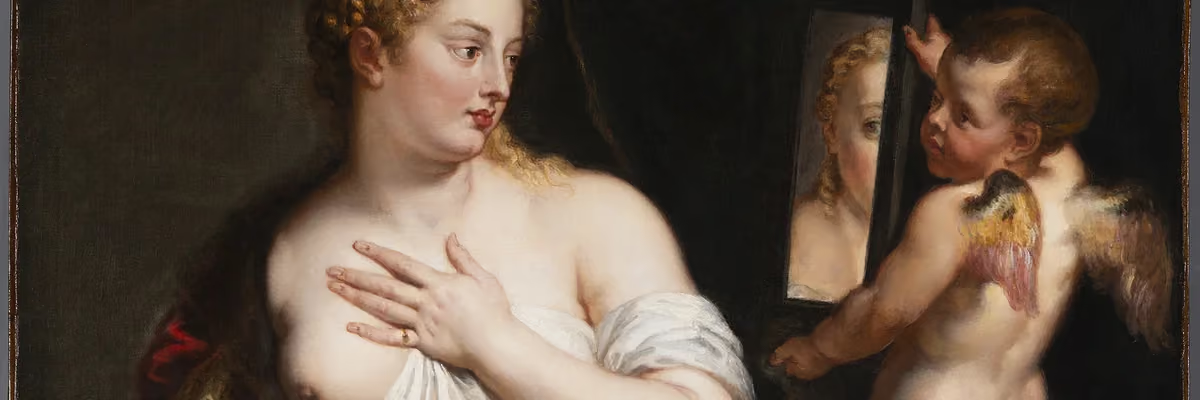
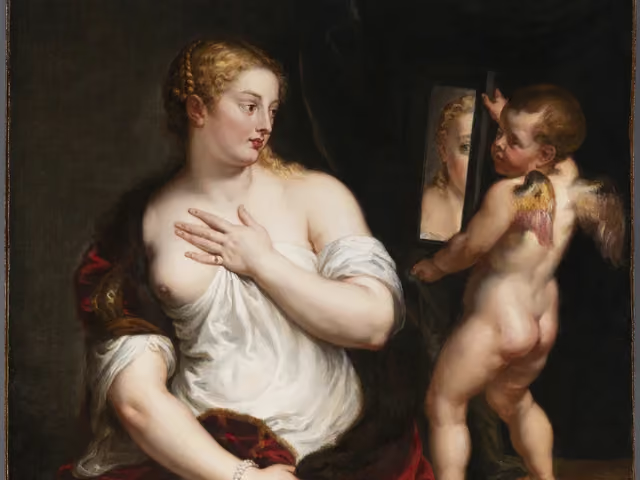


A special installation in the permanent collection galleries of the Museo Thyssen-Bornemisza documents the 18-month restoration of Peter Paul Rubens's Venus and Cupid. Interactive digital displays walk visitors through the technical study that stripped away decades of yellowed varnish and reset the painting's original colour balance.
What it is
Painted around 1606-1611, Venus and Cupid had a well-preserved paint layer but carried small old losses, scattered craquelure and a varnish so yellowed it dulled the lighter passages across the canvas. Restorers removed the oxidised varnish, consolidated the paint layer and stabilised the cracking to secure the work long-term.
Technical imaging added two findings beyond the cleaning. Infrared reflectography showed a clean, confident underdrawing, evidence Rubens was copying a Titian composition with the design already settled. X-rays revealed dense oil impasto on the figures against an almost unfinished background, and caught small changes along the way: Venus's mirrored gaze was first aimed at the viewer, then redirected to her left, while Cupid's feet shifted slightly between drawing and final paint.
The frame, a later French Régence piece in carved, water-gilded wood, was cleaned of grime and a bitumen coating, then had its cracks and losses filled and retouched with reversible materials.
Why it's worth attending
Restoration work is rarely shown to the public in this much technical detail. Here, the comparative before-and-after imagery, X-rays and infrared scans that normally stay in a conservation lab are put on permanent-collection walls alongside the finished painting. The discovery that the composition copies a lost Titian original adds an art-historical result to what started as a conservation project, not just a cleaner surface.
Practical info
The installation sits within the permanent collection route rather than the temporary exhibition galleries, so no separate booking or ticket is needed beyond general admission. It includes a short audiovisual projection; allow extra time if visiting on a busy weekend.
FAQ
How long did the restoration of Rubens's Venus and Cupid take?
The technical study and restoration of Venus and Cupid took 18 months, combining laboratory material analysis with the physical cleaning and stabilisation of the canvas and its frame.
What did restorers discover about Rubens's Venus and Cupid?
Infrared imaging revealed that the composition is a copy of a work by Titian, which Rubens painted from a settled underdrawing with few later changes, plus small revisions to Venus's gaze and Cupid's feet.
Do I need a separate ticket to see the Rubens restoration display?
No. The installation is part of the Museo Thyssen-Bornemisza's permanent collection in room 19 and is covered by the same ticket, priced from €10.
What was wrong with the varnish on Venus and Cupid before restoration?
Decades of ageing had turned the varnish yellow, muting the painting's colour balance and sense of perspective, especially in its lighter areas, until restorers removed the oxidised layer.
Is Rubens's Venus and Cupid frame original to the painting?
No. The carved, water-gilded frame is French, in the Régence style, and postdates the painting; it was cleaned and had cracked and missing sections restored alongside the canvas.